Plenary Sessions

October 23rd | Friday - Afternoon

16:40 - 17:30

Plenary Session

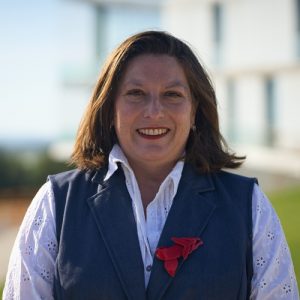
María Luisa Sierra Huedo

San Jorge University

PhD in International Education and Master of Arts in ComparativeInternational Development Education from the University of Minnesota,USA. Vice Dean of Internationalization at the School of Communication andSocial Sciences at Universidad San Jorge, Zaragoza, Spain. Professor andresearcher at the Group Migrations, Interculturalism and HumanDevelopment. Her research interests are intercultural communication, international education focusing on the internationalization of highereducation, topics and areas in which she has developed research andpublished articles and book chapters.https://orcid.org/0000-0001-8809-7924
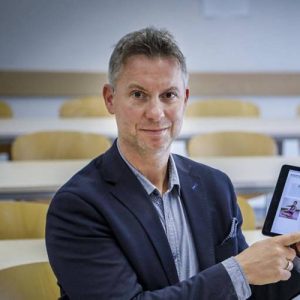
PhD in International Education and Master of Arts in ComparativeInternational Development Education from the University of Minnesota,USA. Vice Dean of Internationalization at the School of Communication andSocial Sciences at Universidad San Jorge, Zaragoza, Spain. Professor andresearcher at the Group Migrations, Interculturalism and HumanDevelopment. Her research interests are intercultural communication,international education focusing on the internationalization of highereducation, topics and areas in which she has developed research andpublished articles and book chapters.https://orcid.org/0000-0001-8809-7924

María Luisa Sierra Huedo
San Jorge University

In the current globalized context, where certainty has started to vanish and uncertainty is the only constant element in our lives, we need to educate ethical global citizens, who are able to navigate these troubling waters. This is indeed one of the objectives of higher education institutions, but not the only ones, schools are starting to realize that this is a must. Primary and secondary education play a key role in setting the first foundations for this type of education, which is included in the International Education academic field. Bilingual programs play an important role in promoting knowledge about other cultures, helping students to start becoming comfortable in unknown settings, and helping them to communicate effectively across cultures. This is part of international education, and it helps the internationalization processes of higher education institutions.

October 24th | Saturday - Morning

11:50 – 12:40

Plenary Session

Oliver Meyer

Johannes Gutenberg-University Mainz
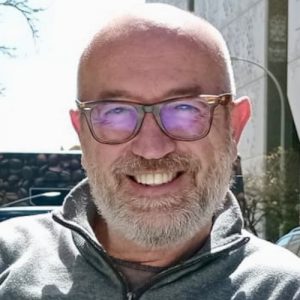
Oliver Meyer
Johannes Gutenberg-University Mainz

In this keynote, I will present Pluriliteracies for Creative and Responsible Global Citizenship as a pedagogic approach that moves the language(s) classroom from a primary focus on proficiency towards deeper learning: learners build disciplinary ways of constructing knowledge and develop pluriliterate repertoires for communicating understanding across languages, cultures, communities, genres, and modes. In the social and political conditions of our time, this deeper learning must also include the capacity to engage with global issues and fragmented public discourse: to examine knowledge claims, consider divergent perspectives with empathy and openness, and participate in ways that are ethically responsible. Central to our approach are cognitive empathy and compassion (for self and other), which deepen understanding and help learners build bridges across echo chambers whilst sustaining ethical vigilance.

October 24th | Saturday - Afternoon

16:00 – 16:50

Plenary Session

Víctor Pavón Vázquez

University of Córdoba

Víctor Pavón Vázquez is a Professor at the University of Córdoba, where he teaches pronunciation, EFL methodology, and bilingual education. He is a member of the CRUE Language Accreditation Commission, the current General Director of Linguistic Policy, and the Director of the UCO Idiomas Language Center at the University of Córdoba.

As a professor and researcher, he actively participates in educational bilingualism programs. His current interests focus on researching the outcomes of bilingual education programs and training teachers in specific competencies for these types of programs.

Víctor Pavón Vázquez
University of Córdoba

The growing ambition of universities to strengthen their international profile has intensified the need to rethink language use and language management across all levels of higher education. Within the European Higher Education Area, internationalisation has become a strategic priority, leading to a significant increase in programmes and courses taught in English as a means of attracting international students, fostering academic mobility, and enhancing global competitiveness. Nevertheless, despite this rapid expansion of English-medium instruction and multilingual practices, there is still limited consensus regarding the objectives, scope, and implementation of internationalisation policies. Universities often lack a coherent and homogeneous institutional approach capable of addressing the complex linguistic, pedagogical, and organisational challenges generated by this new scenario, without establishing comprehensive language policies that ensure academic quality, linguistic inclusion, and long-term sustainability.

October 25th | Sunday - Morning

13:10 – 14:00

Plenary Session

Xavier Gisbert da Cruz

Bilingual Education Association

He holds a degree in French Philology from Complutense University of Madrid and is a Professor of French.

He has served as Education Advisor at the Spanish Embassy in London, Director of the “Las Acacias” Regional Innovation and Training Center, General Director for the Improvement of Teaching Quality at the Ministry of Education of the Community of Madrid, General Director of Evaluation and Territorial Cooperation at the Ministry of Education, Culture and Sport, and Education Advisor at the Spanish Embassy in Washington.

In the Community of Madrid, he was responsible for the development of bilingual education in primary school, the design and implementation of bilingual education at the secondary level, the management of the language assistant program, teacher training, and the development of specific training for the bilingual program.

He directed the EICE 2016 Congress and is the Director of the CIEB International Congresses on Bilingual Education. He is the author of various publications and has given numerous presentations and lectures. He is currently the President of the Bilingual Education Association and Vice-President of Professionals for International Education.

Xavier Gisbert da Cruz
Bilingual Education Association